
Having It Your Way
Or, all sorts of ways, as the case may be.

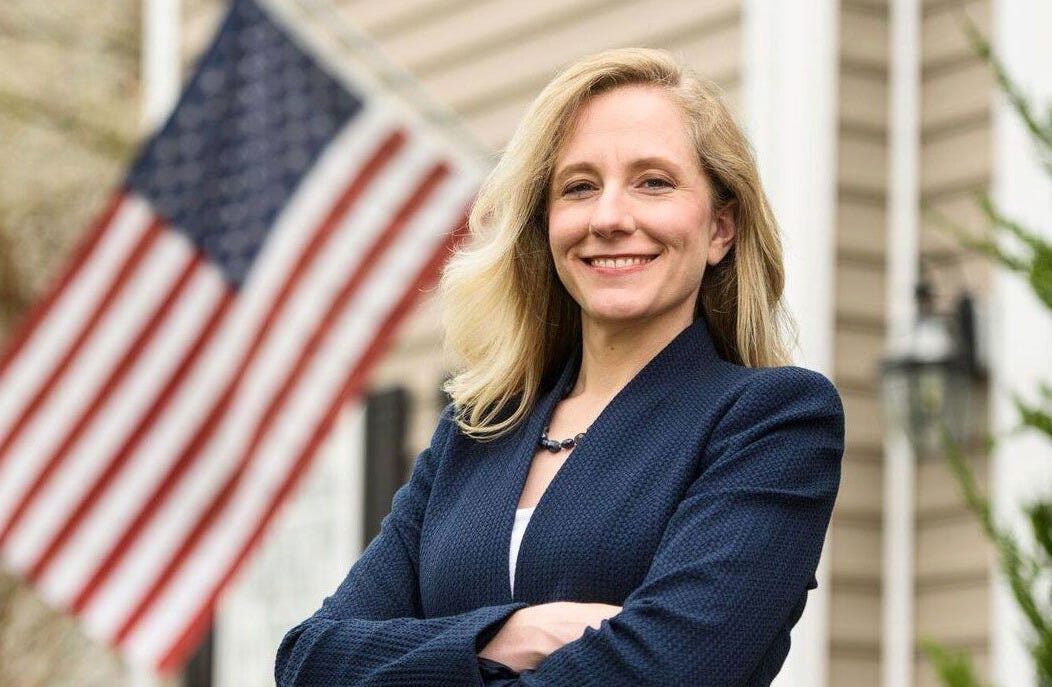
Abigail Spanberger, the Democratic candidate for governor, says she’s opposed to repeal of Virginia’s right-to-work law – but, you know, maybe we can work something out?
That appears to be the suggestion.
The obvious retort: “She just wants to have it both ways.”
Well, yes. You do that in politics. Having things “both ways” is a democratic ideal – at least when it comes to political positioning. What could be better?
Early in the 20th century, Virginia lawmakers got squeezed by their personal preferences on liquid refreshments and Temperance Union crusades to legislatively cut off America’s booze supply. With so many living “wet” while voting “dry,” Virginia gave birth to the nation’s first amphibious politicians.
So went the joke and no doubt everyone thought, heck, why can’t we have it both ways? What’s the matter with America?
It got like that in the 1980s over the state lottery. Joseph William “Billy” O’Brien, Jr. convivially represented the Virginia Beach area in the House of Delegates from 1974 to 1992 and that man would just not give up.
Billy was a character, safe to say. He’d been a Great Bridge High School football coach and teacher. A captain in the U.S. Marine Corps before that, he could take a punch and keep on coming -- legislatively-speaking.
Out it came, year after year: Billy’s latest version of the lottery bill – the “lone voice in the General Assembly” some called him. And, darn, this thing is picking up support.
The lottery was revenue for Billy. Very simple. It ended up tied to education, but Billy hardly gave a hoot about purposes and intents. Tie it to education, sure, just so long as it gets more votes on the floor. Say it’s for motherhood and apple pie, whatever.
But he couldn’t quite get it done until someone had the bright idea of a statewide referendum. Let the people decide.
Referendums, plebiscites, any sort of political evasion grated on some, older souls in the General Assembly in that period. What do you think we’re here for? Don’t pass the buck to the people.
Well, so much for that. The buck got passed in 1987, but only after Gov. Jerry Baliles signaled that he’d go along with having the referendum.
Did Baliles favor the lottery? No. There was residual opposition to gambling as sin. But the real objection got expressed by Charlottesville Sen. Tom Michie. “All we’re doing here,” he said once, “is authorizing the poor to tax themselves.”
Those fears were well founded, as you may see today in any Virginia convenience store at any hour.
The lottery referendum was Baliles’ own premeditated straddle — to have it both ways. He looked over his desk once, smiled and said, “You know, if the referendum works out, we can be opposed to the lottery and still get to spend the money.”
Did anyone much object? Not especially, and perhaps governor-to-be Abigail Spanberger could play the amphibian on right-to-work and do OK.
But here’s the thing: It leaves the Republican candidate for governor, Lt. Gov. Winsome Earle-Sears, with less to clarify. All she has to do is just keep saying, “no.”
In 1997, for instance, Attorney General Jim Gilmore, the GOP candidate for governor, proposed repeal of the local personal property tax on cars. “End the car tax” became his signature campaign chant.
Don Beyer, the Democratic Party candidate, opposed Gilmore’s plan as fiscally irresponsible and a threat to public services such as schools, law enforcement, and the stability of local governments.
Only, as the campaign progressed, Gilmore’s hot idea gained traction and Beyer altered his stance with his own limited tax relief plan, aimed at low- and middle-income families.
“In order to govern effectively,” Beyer said, “first you have to win an election.”
It’s Congressman Beyer these days and he’s a champ in my book -- a supremely decent, committed and intelligent public servant. Northern Virginia is lucky to have him.
But Don Beyer’s shift in 1997 had the effect of validating Gilmore’s core proposition on the car tax, that it needed to go away and go away for everyone. “End the car tax” proved more compelling than “end the car tax -- sorta.”
Now it’s “preserve right-to-work – sorta” and hasn’t Spanberger just validated the core proposition on right-to-work?
You cannot say for sure. Not now.
The growing Democratic Party enthusiasm for unionism generally – or at least that part of it that takes in public employees – will doubtess inspire additional questions for Spanberger.
Earle-Sears will paint scary pictures. Teachers, police, firemen, on strike. In Virginia.
Spanberger will have to elucidate.
It’s a conversation worth having. You can’t get past that. Let all voices sing out. Right-to-work, after all, has been hanging in space since the failed 2016 attempt, by referendum, to enshrine the thing in the Virginia Constitution.
We’ll see who has the better part of the argument, but endless explanation — the fruit of having it both ways — can be a load to carry.