
Memorial Day 2025
A few thoughts on France and these pictures.

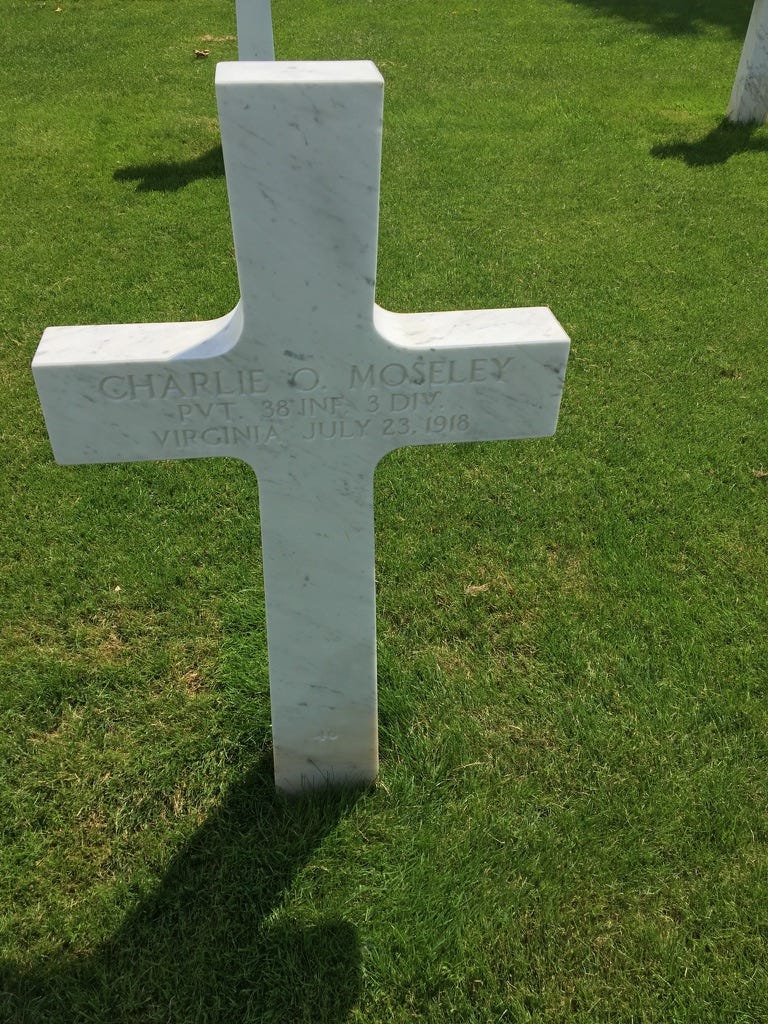
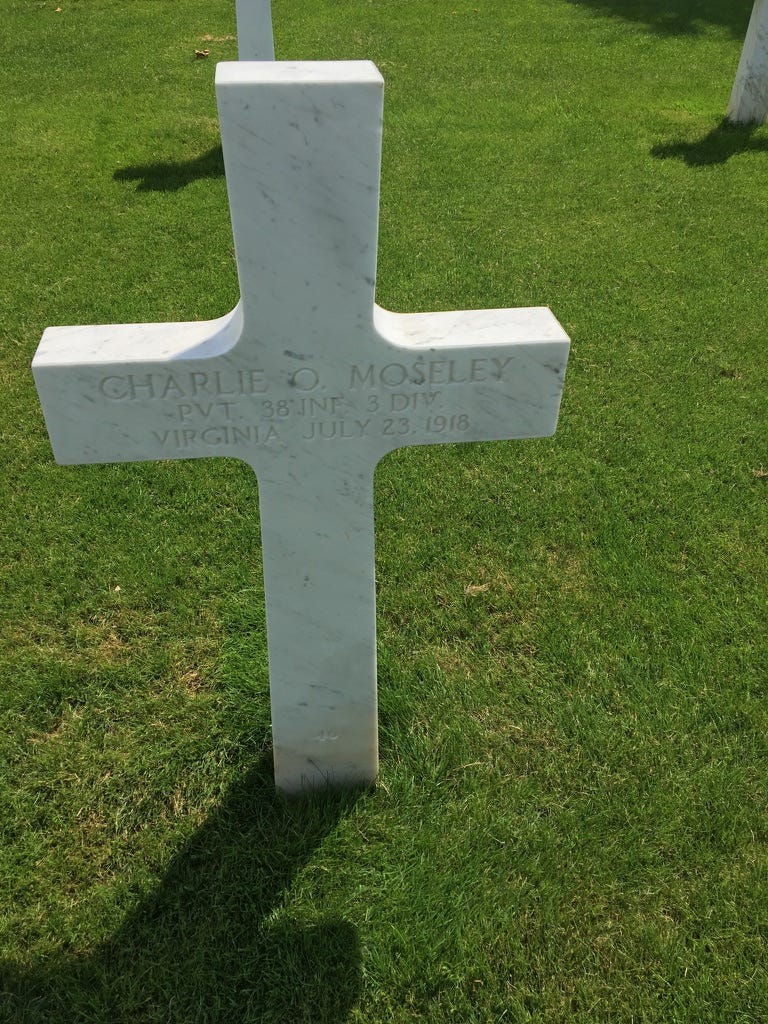
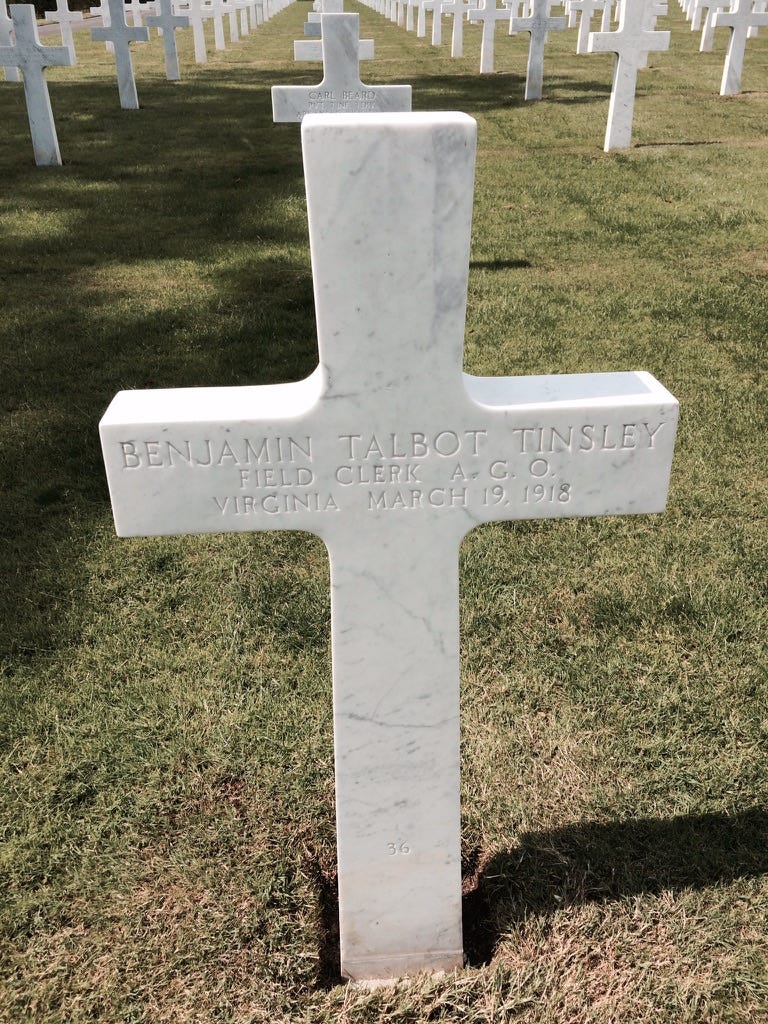
You can tell a few things simply from the limited information that appears on these headstones. Pvt. Moseley served in the 38th Infantry Regiment of the 3rd Division and died on July 23, 1918. That would have put him, in all likelihood, along the Marne River near or east of Chateau-Thierry. The German Army launched its last great offensive of 1918 on July 15 and it quickly stalled along the Marne — an outcome to which the U.S. contributed greatly. The French and U.S. counter-attacked three days later and the Germans never regained the initiative.
Pvt. Moselely’s headstone sits in the Aisne-Marne American Cemetery, a First World War facility otherwise known as Belleau Wood. From Paris, it’s a relatively easy drive up the A4 to the exit at Château-Thierry and from there it take 15-20 minutes to reach Belleau, the village that lends its name to this American Battle Monuments Commission cemetery.
In 1919, the U.S. War Department set out to establish permanent military cemeteries in Europe and for complicated motives. The U.S. could have, as it does now, repatriated the remains of its war dead and, in fact, did so in most cases.
But not all. The U.S. came under pressure from the British and French governments to avoid that — to not bring American soldiers home — largely out of apprehension that public pressure might bear upon them to do likewise.
It was British policy to bury their war dead near to where they fell. If you find some ground well above the Somme River, where so you may see for some distance, you will notice many small British cemeteries — all brilliantly maintained by the Commonweath War Graves Commission — scattered over the landscape. Sometimes you will also find British war dead, carefully marked, interred within the cemeteries of French churches. The French built cemeteries for their WWI casualties, too, but the numbers of dead were so great that the remains were often collected into mass graves or “tombe collective.”
Official U.S. thinking tended to be inconsistent, largely because American public opinion was inconsistent. Families could elect to bring their kinsmen home to be buried and most did just that. Of the remains originally interred at Belleau Wood, approximately 60 percent were repatriated to the United States in the years immediately following WWI.
Today it would take an act of Congress to move anyone. American planners theorized that if the cemeteries were made beautiful — if they conveyed in all ways possible the nation’s respect for the sacrifices involved — then families would be more inclined to leave their loved ones in Europe.
Interestingly, there was a third option: Recent immigrants to the U.S. could be returned to their country of origin. In other words, the American Expeditionary Force included many immigrants who were inspired to uniformed service knowing full well that they might end up back in Europe. That happened and many of them died in the fighting. I have seen a map that marks all the burial sites where these American immigrant war dead ended up and it’s stunning. Little dots cover the U.K and all of Europe.
How did I come to know any of this? More than 30 years ago, I began looking into the history of one uncle — my maternal grandmother’s brother, Meredith Garland — and one paternal grandfather, R. Everett Morse, who’d been commissioned to lead an Army ordinance company in France. Both survived the fighting, but Meredith only barely. He was gassed and the neurological effects proved long-lasting. My grandfather appeared to have sailed through it all and, stupidly, I never pressed him on his experience. Later, once my father gave me his records, I became far more interested.
You start with an idea. Then you go to France, armed with whatever you’ve read, and you soon discover that your idea is wrong. So you try to dig into it further and the more you root around, the more interesting it gets. Thirty-odd trips to France and hundreds of books later, a few lights illuminate in your head and cause an insight or two. It helped immensely to make friendship along the way, including that of a brilliant retired French teacher who owned a farm on the Marne River with two houses. The smaller one she offered to me as a place of repose. “Come whenever you like,” she said, and I did. I then started walking the American battlefields — nearly all of them — and kept asking questions.
I also got to know many of the American cemetery superintendents, all employees of the ABMC. There’s a superintendent for every cemetery and they live there. They put up with me, got comfortable and started telling me stories. I became greatly impressed by their dedication to the work. Any number of them were retired military and often true characters.
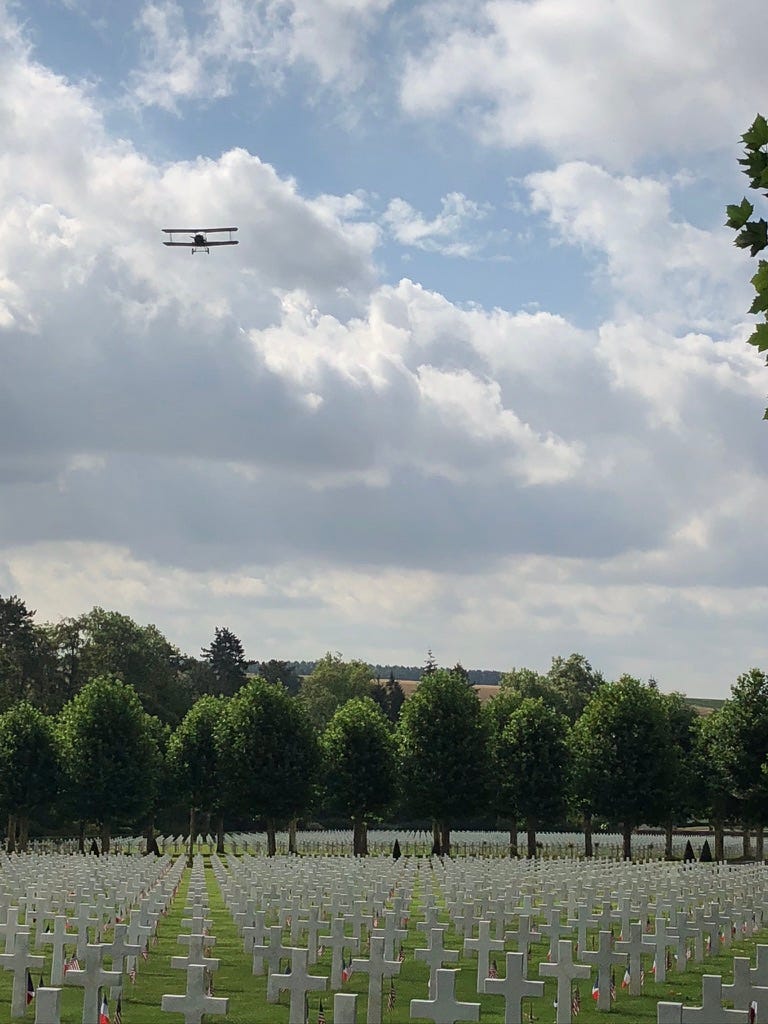
Today, the Aisne-Marne American Cemetery contains 2,289 graves, with 250 of those being unknowns. And, if you know anything about this facility at all, you know that “Belleau Wood” is virtually a U.S. Marine Corps shrine. The Corps will be represented there today. It invariably brings a band and often hauls in the commandant himself. French officials vie for places on the speaking stand, as they regard it an honor to participate. That’s a common attitude in northern France. Over the years, many private American memorials have been erected and it is the French who look out after them. They have not forgotten a thing and God bless them for that.
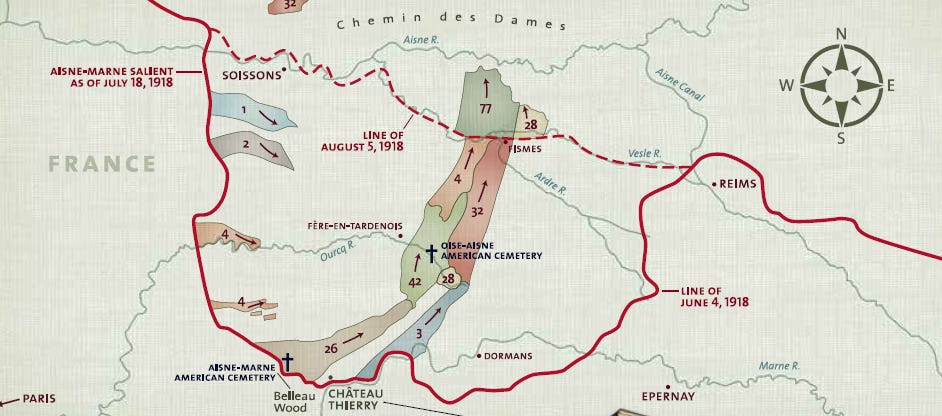
I stole this little map from the ABMC and the spaces colored one shade or another indicate American operations in the Marne region in 1918. The French occupied everything else, it’s worth noting. Belleau Wood appears just to the northwest of Chateau-Thierry. Another ABMC cemetery — Oise-Aisne — is up on the Ourcq River north of Dormans. They are worth a visit and I will write some more about all this in the future.
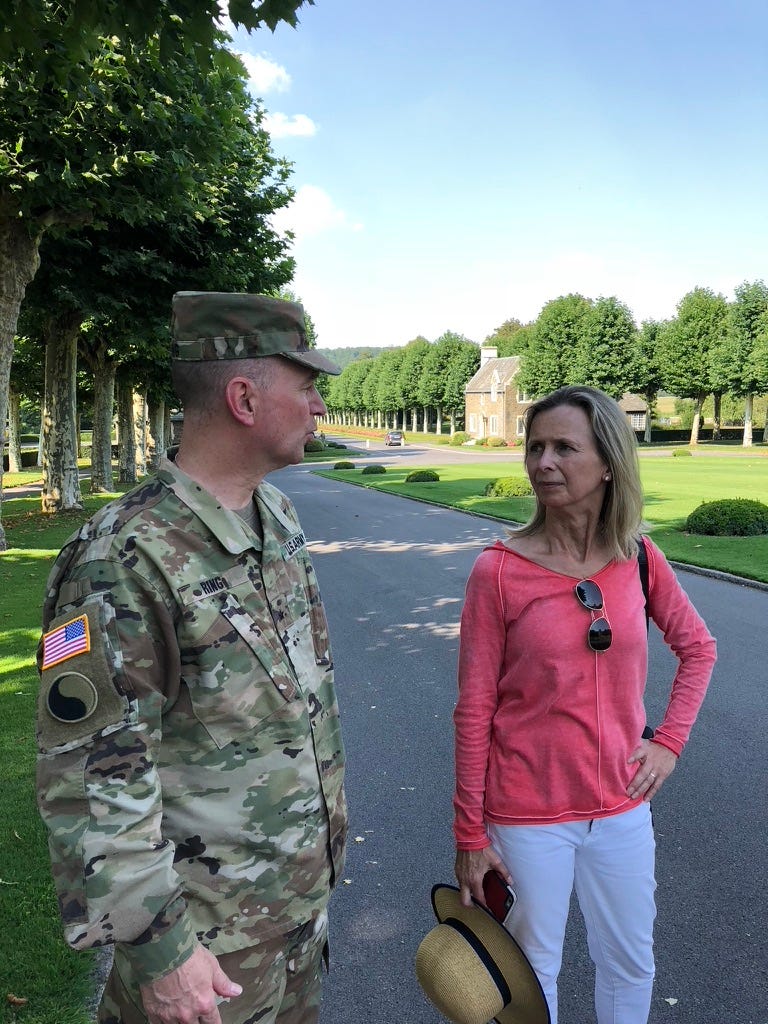
In conversation with Prof. Morse is Gen. James W. Ring, a VMI graduate and the 29th Adjutant General of Virginia. At the time (2018) he was second-in-command, as I recall, and accompanied by the troops you see below — all members of the Virginia National Guard.
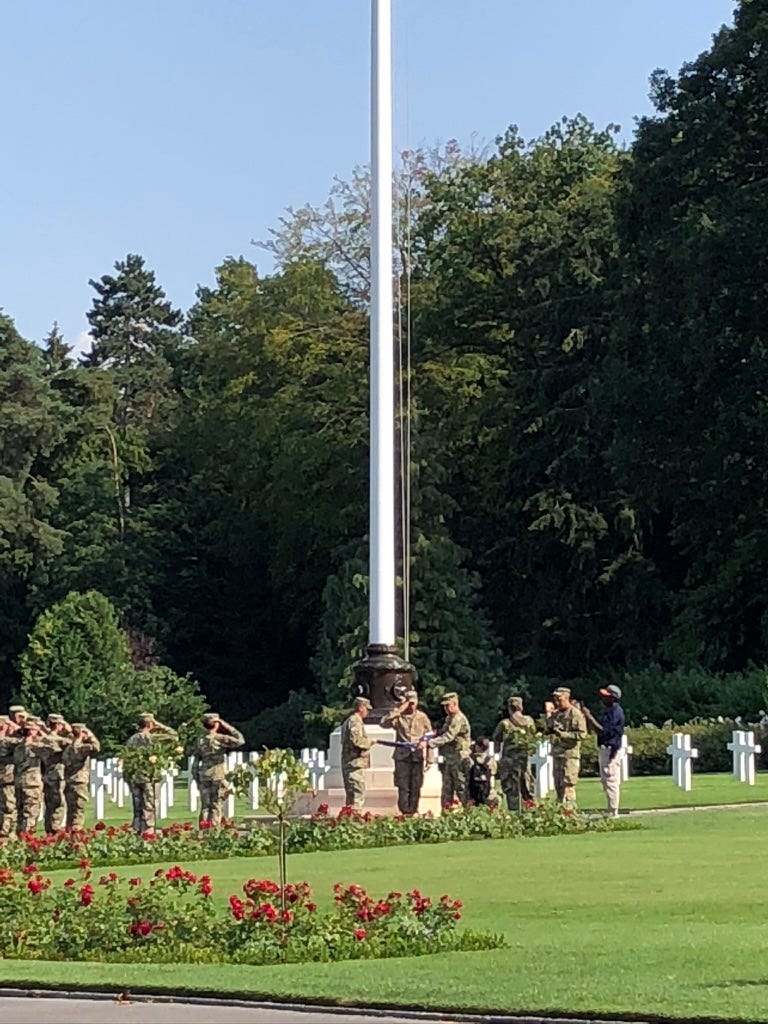
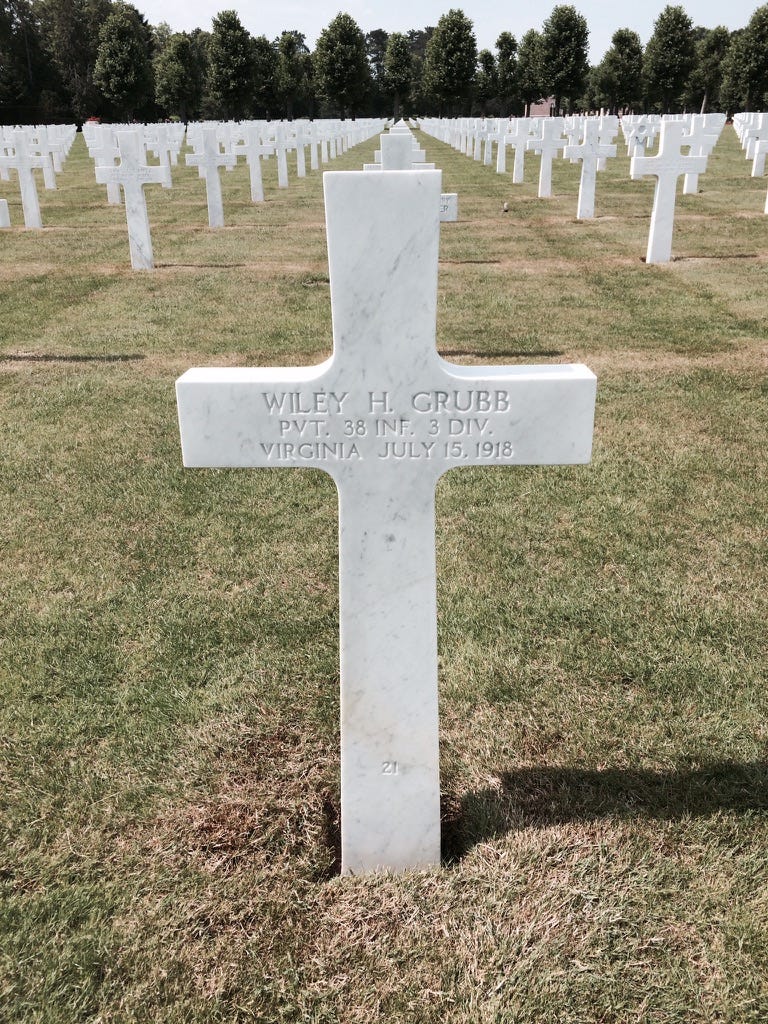
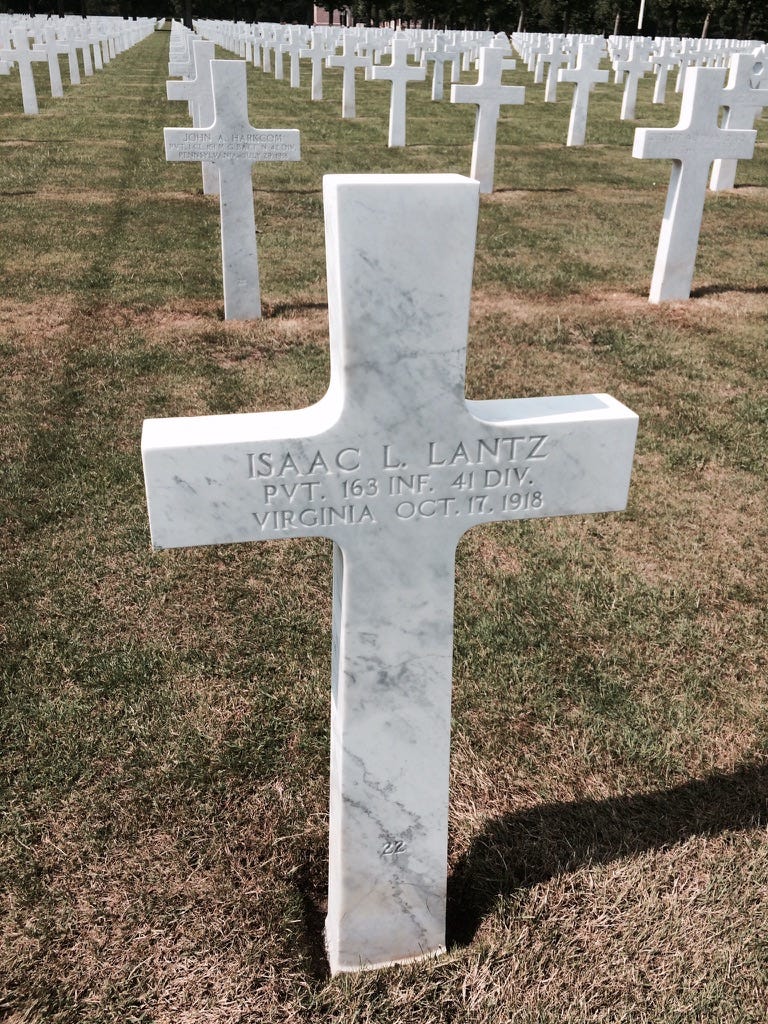
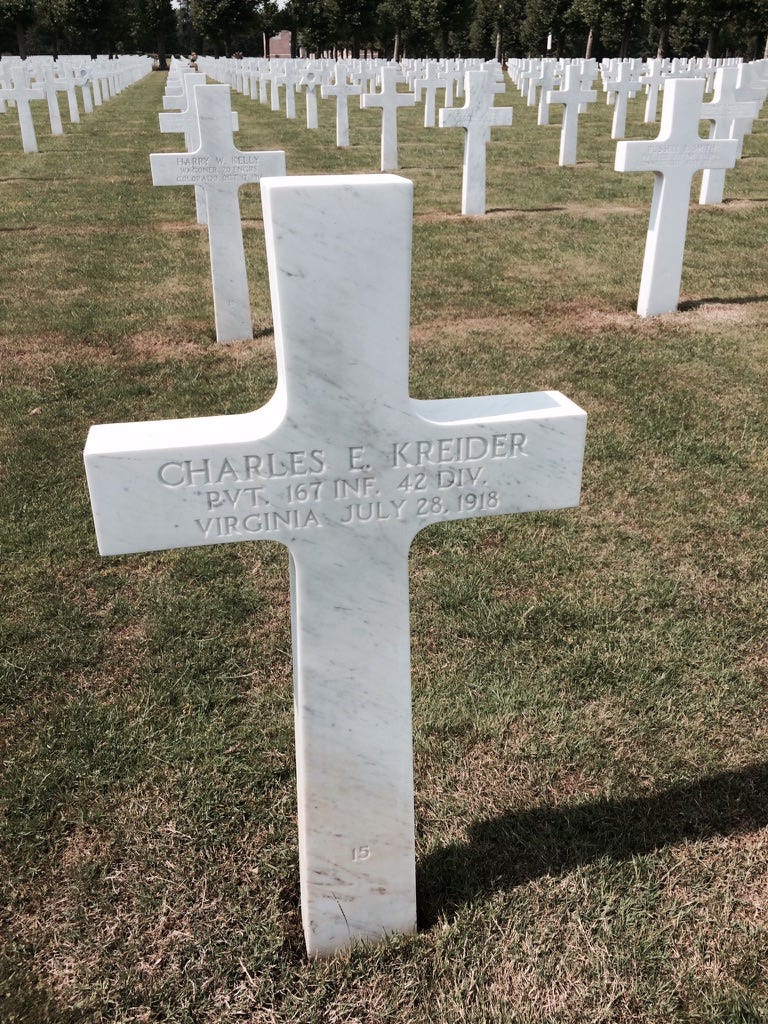
Oise-Aisne American Cemetery
VERY nicely done, GC!